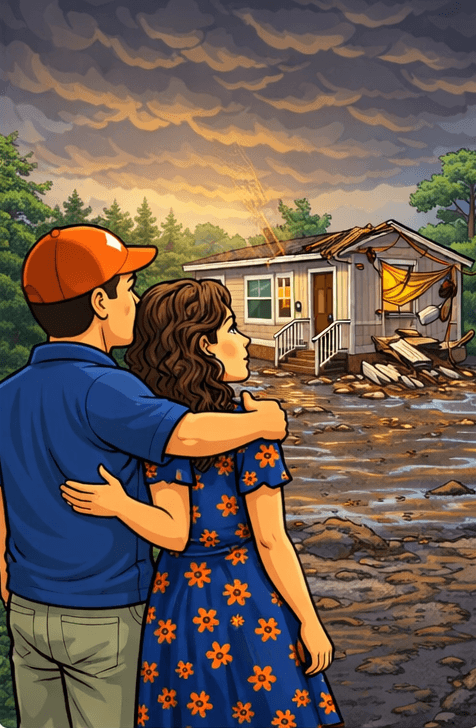
What mobile home insurance usually covers
You do not need to memorize policy language. You only need to understand how your policy responds when real problems happen.
- Damage to the home from covered events like fire, wind, and hail.
- Personal belongings after covered losses, up to policy limits.
- Liability protection if someone is hurt on your property.
- Temporary living expenses if a covered loss makes your home unlivable.
Quick reminder: Lender-required coverage is only the starting point. It is not always enough to protect your full financial risk.
Core coverage types
Dwelling Coverage
Helps repair or rebuild your home after covered damage. This is usually the required coverage for financed homes.
Property + Liability
Protects belongings and can help with legal and medical costs when covered liability claims happen.
Loss of Use
Can reimburse temporary housing costs when a covered claim makes your home temporarily uninhabitable.
Where people usually get tripped up
Most issues come from assumptions, not bad intent. These are the most common ones we see:
- "I thought flood was included."
- "I picked the cheapest quote without checking claim payout type."
- "My lender set it up, so I assumed everything was covered."
Reality: Standard policies often exclude flood, and lower-price policies can use settlement terms that pay far less after depreciation.
Optional coverage and add-ons worth reviewing
Common add-ons
- Replacement-cost endorsements
- Trip or transit coverage during relocation
- Water backup coverage
- Scheduled valuables (jewelry, watches, firearms)
- Animal liability riders
Who should strongly consider them
- Owners in higher weather-risk regions
- Homes with higher-value personal property
- Owners relocating a home
- Buyers who want stronger claim payout protection
- Owners needing broader liability limits
ACV vs replacement cost
| Feature | Actual Cash Value (ACV) | Replacement Cost |
|---|---|---|
| Claim payout method | Pays depreciated value at time of loss | Pays more to replace with similar new materials, up to limits |
| Premium impact | Often lower premium | Often higher premium |
| Out-of-pocket risk | Usually higher after a claim | Usually lower after a claim |
| Best fit | Budget-first buyers who accept more payout risk | Protection-first buyers who want stronger recovery |
Carrier examples for manufactured homes
Carrier availability varies by state, county, home age, and underwriting guidelines. These are common names many buyers recognize:




Manufactured home insurance FAQs
What does a manufactured home policy usually include?
Most policies include dwelling, personal property, liability, and loss-of-use coverage for covered losses.
Is flood damage covered by default?
Usually no. Flood losses are commonly excluded and often require a separate flood policy.
Can older manufactured homes still be insured?
Often yes, depending on home condition, updates, location, tie-downs, and carrier underwriting rules.
Why can quote prices vary so much?
Carriers price risk differently based on location, age, prior claims, coverage limits, deductibles, and endorsements.
Do I need insurance before closing?
In most financed purchases, yes. Lenders generally require proof of insurance before closing.